If you have never hired a security guard before, the question is fair: what does a guard actually do all shift? The short answer is that a professional security guard prevents incidents, responds to them when they happen, and creates a documented record of conditions on your property. The longer answer depends on the assignment, the site, and the kind of risk you are managing.
This guide breaks it down in plain language so you can evaluate whether your business needs guard coverage, what to expect from it, and what California law allows a guard to do.
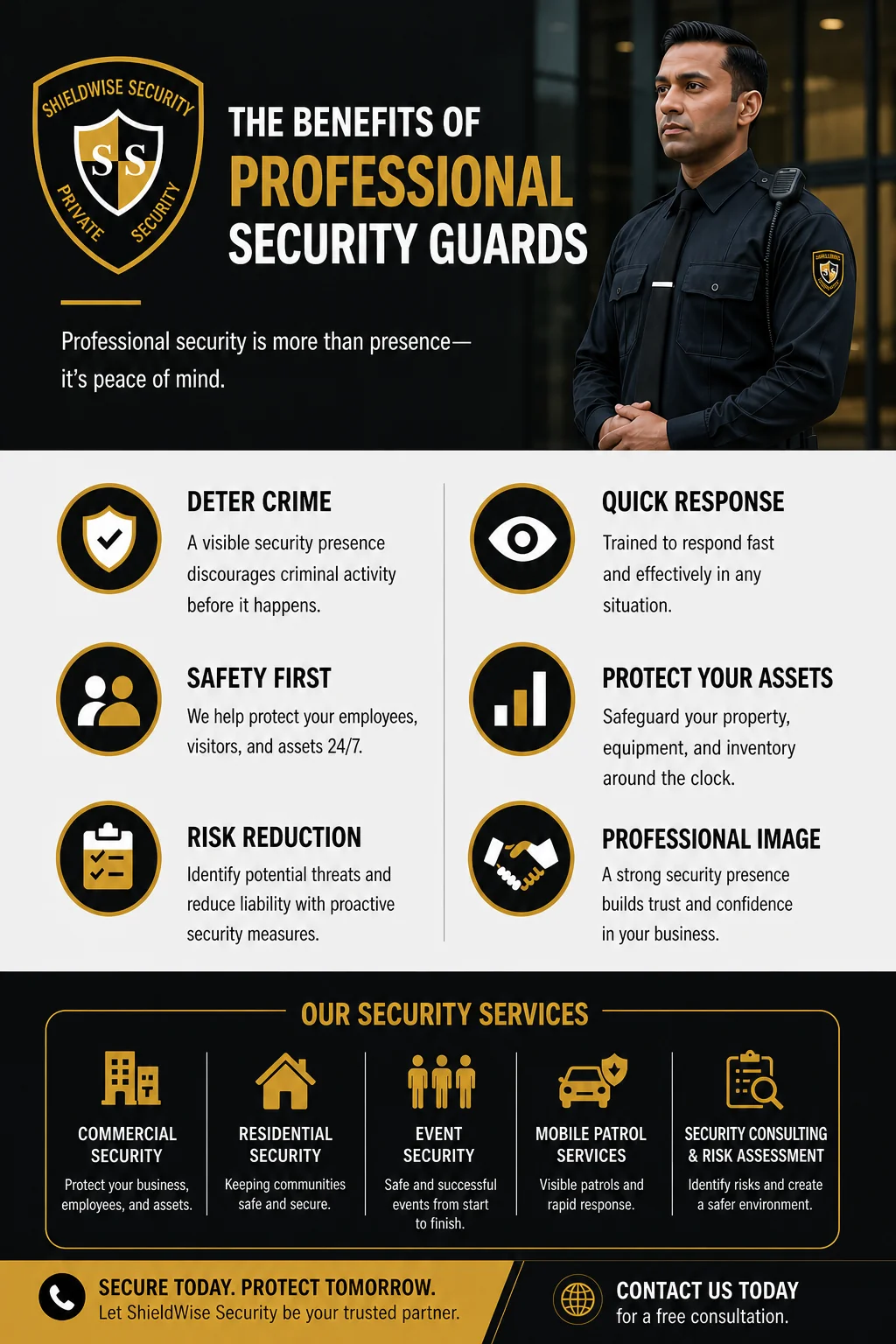
The Core Job: Prevent, Respond, Document
Every guard assignment, whether on a construction site in Riverside, a corporate office in Orange County, or a hospital in Los Angeles, comes back to three core duties:
1. Prevent
A visible uniformed officer changes behavior. Most property crime is opportunistic, and an obvious security presence sends the opportunity elsewhere.
2. Respond
When something does happen, a guard assesses the situation, makes a decision, and acts. That might mean confronting a trespasser, calling police, helping an injured visitor, or coordinating an evacuation.
3. Document
Every shift produces a written record. Patrol logs, incident reports, and timestamped activity logs become the paper trail your insurance company, your attorney, or law enforcement may eventually need.
What a Typical Shift Looks Like
The exact tasks vary by post, but a standard guard shift in California usually includes a mix of:
- Foot or vehicle patrols of the property at randomized intervals
- Access control at entry points: checking IDs, signing visitors in, verifying deliveries
- Open and close services at the start and end of business hours, including verifying doors and gates are properly secured
- Alarm response when sensors trigger, including a physical check of the area
- Customer assistance such as giving directions, answering questions, helping with disabled vehicles in the lot
- Employee escorts to and from cars during late shifts
- Incident reporting for anything from a minor slip-and-fall to a confrontation
- Communication with property management and a dispatch center throughout the shift
Reports are usually digital and timestamped. A property manager logging in the next morning sees a complete record of what happened overnight, which doors were checked, and any issues that came up.
What California Law Says Guards Can Do
This is where new clients often get the wrong idea. A licensed security guard is not a police officer and does not have police powers. Here is what California law actually allows.
Citizen's arrest authority (Penal Code 837). A security guard, like any private person in California, may detain someone they personally witness committing a crime. The detention must be reasonable in force and duration, and the suspect must be turned over to law enforcement without unnecessary delay.
Use of force. A guard may use only the force reasonably necessary to detain a suspect or defend themselves or others. California's Bureau of Security and Investigative Services (BSIS) requires every guard to complete an 8-hour Powers to Arrest and Appropriate Use of Force course before they ever step onto a post.
Carrying a firearm. Only with a separate BSIS firearms permit on top of the guard card. The permit is caliber-specific. A 9mm permit does not authorize a .40 or a shotgun. See our Armed vs Unarmed Security Guards guide for the full breakdown.
Carrying a baton or pepper spray / tear gas. Each requires its own training and certification under Business and Professions Code Section 7583.33 and Penal Code Section 22835 respectively.
What guards cannot do: conduct searches without consent, hold someone for trivial offenses, fire a weapon outside immediate self-defense or defense of others, or take enforcement actions outside their assigned post.
Why Properties Hire Guards Even With Cameras and Alarms
The biggest reason is judgment. A camera or motion sensor cannot tell a delivery driver from a thief. A guard can. Specifically:
- Deterrence. A uniformed guard visible from the street is the single most effective deterrent for opportunistic property crime.
- Real-time response. A camera records what happened. A guard does something about it as it happens.
- Liability protection. Documented guard presence supports insurance claims and helps with the foreseeability standard California courts use in premises liability cases (rooted in Ann M. v. Pacific Plaza Shopping Center).
- Customer experience. A guard answering a question or escorting a tenant is part of the property's service. A camera is not.
- Adaptability. A storm, a power outage, or an unfamiliar visitor are all easy for a person and impossible for a fixed sensor.
For a side-by-side breakdown, see our piece on security guards versus security cameras.
Industries That Most Often Hire Security Guards
- Retail centers and shopping malls, to deter organized retail crime and assist customers
- Construction sites, overnight protection of equipment and copper
- Apartments and HOAs, gated access, parking patrols, after-hours coverage
- Hospitals and clinics, de-escalation, controlled access, patient and staff safety
- Warehouses and distribution centers, gate control and yard patrol, especially in the Inland Empire
- Schools and campuses, visible presence, visitor screening, after-hours patrol
- Events, crowd management, entry screening, alcohol service support
- Corporate offices, front desk reception, badge access, visitor management
How Guards Are Trained in California
Every guard you hire through a BSIS-licensed company must have completed:
- An 8-hour pre-registration course on Powers to Arrest and Appropriate Use of Force
- A criminal background check through the California Department of Justice and the FBI
- 32 additional hours of skills training within six months of registration
- 8 hours of continuing education annually after that
Armed guards add a firearms permit with caliber-specific qualification. Beginning January 1, 2026, under SB 652, the 8-hour pre-registration training must be completed within six months before application and delivered by a single BSIS-licensed provider. Full training breakdown in our California guard training requirements guide.
Frequently Asked Questions
Can security guards detain someone?
Under California Penal Code 837, yes, but only when they personally witness a crime. The detention must be reasonable in force and duration, and the suspect must be turned over to law enforcement without unnecessary delay.
Can security guards arrest someone?
Not in the police sense. Guards can make a citizen's arrest under Penal Code 837 when they witness a crime. They do not have peace officer authority and cannot conduct general arrests.
Can security guards carry guns in California?
Only with a BSIS firearms permit on top of their guard card. The permit is caliber-specific and requires both classroom and live-fire qualification.
Are security guards first responders?
Not in a legal sense, but they are usually the first person on scene during an incident. Their observation and reporting often shape how police, fire, and EMS respond.
How much does it cost to hire a security guard in California?
Pricing depends on region, service type, and contract length. See the full California security guard cost guide for current rates.
Safety note: ShieldWise Security does not provide legal, medical, or emergency first-responder services. In an active emergency, always call 911 first.
Need a Licensed Security Guard in California?
ShieldWise Security (BSIS PPO #122008) provides armed and unarmed guards, mobile patrol, and event security across California. We will walk your property, review your risks, and recommend coverage that fits your operation. Free assessment, no pressure.
Request Your Free Site Assessment