Construction Security Guards for California Job Sites
Licensed construction security guards for overnight standing post, mobile patrol, gang-box and equipment-yard documentation, gate access control, and weekend lockup. PPO #122008.
Construction security guards in California solve an economics problem, not just a deterrence problem. Copper wire stripped from an unfinished apartment complex in the Inland Empire moves at scrap yards for a fraction of what it costs you to replace the wire and re-trench. Skid steers, generators, welders, and gas-powered tools have a resale market that runs faster than law enforcement can catch up to it. Diesel gets siphoned overnight. Lumber walks off the lay-down yard on a Saturday afternoon. None of this is unusual, and none of it is going away.
ShieldWise Security provides construction site security services in California under PPO #122008. Our officers can support job sites with access control, perimeter checks, equipment-yard observation, gate monitoring, fence inspections, activity documentation, and incident reporting based on the needs of the site. Construction sites may face higher risks during overnight hours, weekends, and periods with limited activity, so our security approach focuses on visibility, documentation, and helping reduce opportunities for unauthorized access. Coverage is built around the site's schedule, layout, and risk level, not a single template.
Copper-wire deterrence
Patrol routes around MEP rough-in
Gang-box logs
Tool and equipment counts
Gate access control
Driver and sub verification
Daily activity reports
To the superintendent's inbox
Important: Emergencies and 911
ShieldWise Security does not provide legal, medical, or emergency first-responder services. In an active emergency, always call 911 first. Our construction security officers observe, document, and notify; they are not law enforcement. We are also not Cal/OSHA safety officers, site safety remains the responsibility of the general contractor and the project's designated safety personnel under Cal/OSHA Title 8.
Coverage
What We Cover on Construction Sites
The risk window is overnight and weekends. The targets are predictable. Coverage gets built around both.
Copper wire and metal theft
Stripped electrical, plumbing copper, aluminum HVAC and roof flashing, and rebar are the highest-frequency targets. California Senate Bill 1207 (2022) tightened junk-dealer documentation for non-ferrous metals, but the resale market still moves the material. Patrol routes are written around the wire pulls, MEP rooms, and lay-down zones where theft concentrates.
Equipment theft, heavy and small
Skid steers, mini-excavators, light towers, generators, air compressors, plate compactors, welders, and concrete saws are all on the standard target list. Gang boxes full of hand tools and battery packs get hit the same way. Officers verify equipment lockup at shift start and flag missing items in the daily activity report.
Diesel and fuel siphoning
Skid steer fuel tanks, generator tanks, and any equipment with capped fuel access gets siphoned overnight on sites without coverage. Patrol checks include visual fuel-cap verification on parked equipment.
Lumber, fixtures, and finished material
Active framing sites lose lumber to weekend theft. Finish-out phases lose appliances, fixtures, doors, windows, and copper-clad fixtures from staged delivery areas. Lay-down yard organization matters, disorganized lay-down is a theft accelerator.
Trespassing, squatting, and vacant-structure incidents
California has a real squatting problem on stalled or paused construction projects. We document the activity in writing, post no-trespass language where the property owner has filed a Trespass Letter of Consent with local law enforcement, and notify the GC the same night so action can be taken before it becomes a 60-day notice problem.
Vandalism and graffiti
Tag crews work the same overnight window as theft crews. Photographic documentation of fresh graffiti supports both insurance claims and any subsequent prosecution under California Penal Code 594.
Vendor, sub, and delivery access management
Daytime gate coverage that signs in delivery drivers, verifies sub-contractor identification, and logs equipment ingress and egress. Some projects need a daytime gate officer specifically to control who's on site.
After-incident documentation
When a theft happens despite coverage, what your insurance carrier and the prosecutor need is timestamped documentation: when officers were on site, what was observed, what was reported, what evidence was photographed. Our incident reports are written to that standard.
Honest Scoping
When Construction Security Isn't Enough on Its Own
Honesty about the limits of the service.
Daylight hours during active work rarely need full-time security. A site full of crews is its own deterrent. Daytime gate access control may be useful for delivery and sub management, but a standing security post during active work is usually wasted spending. Save the budget for the overnight and weekend windows where the risk actually concentrates.
Some sites need fire watch in addition to security. If your fire alarm or sprinkler system isn't yet commissioned, California Fire Code 901.7 likely requires a documented fire watch, that's a separate service from theft-and-trespass security. See fire watch for what fire-watch officers actually do and how the documentation differs.
Security isn't OSHA safety. Cal/OSHA site safety, fall protection, hot-work permits under NFPA 51B, and confined-space entry oversight are the safety officer's responsibility under Cal/OSHA Title 8. Our officers report observed safety hazards in the daily report so you can address them, but they don't substitute for a Cal/OSHA-qualified safety officer.
Stalled or paused projects often need different coverage than active sites. A paused project, no daytime crews, no deliveries, often no power, has a different risk profile than an active site. We adjust the coverage plan when a project goes on pause.
Our Process
Our Construction Security Process
Five steps from pre-deployment site walk to morning incident report.
Pre-deployment site walk at risk hours
We walk the site at sunset, around midnight, and again at 4 a.m. on at least one weekday and one weekend morning before quoting recurring coverage. Lighting that looked fine at noon is a different story at 2 a.m. The fence gap nobody noticed is the access point.
Coverage configured to project phase
Excavation, framing, MEP rough-in, and finish-out phases have different theft profiles. Excavation has fuel and equipment exposure; framing has lumber and tool exposure; MEP rough-in has the highest copper exposure; finish-out has fixtures and appliances. Coverage adjusts as the project progresses.
Documented gate, equipment, and lay-down logs
For sites with a daytime gate post, every vehicle in and out gets logged, driver, company, equipment delivered or removed, time. For overnight standing post, equipment counts and lay-down inventory get spot-checked at shift start. Discrepancies hit the incident report immediately.
Friday-to-Monday weekend protocols
Friday at quitting time we verify gate locks, equipment lockup, gang box closure, and fuel-cap status. Sunday night we re-verify everything before Monday crews arrive. If anything moves between Friday lockup and Monday opening, the report shows it.
Same-night incident reports
Every shift produces a daily activity report. Incidents get a same-night report with photos. End-of-week summaries go to the project manager and superintendent for safety meetings, insurance audits, and theft-trend tracking.
Transparent Pricing
Construction Security Pricing in California
Pricing depends on coverage hours, post type, site size, project phase, and whether armed coverage is needed. Quoted in writing after a site walk.
Unarmed Standing Post / Overnight
Most California construction security. Overnight, weekend, and gate-access posts. Officer's job is observe, document, deter.
Armed Standing Post
Sites with prior armed-incident history, significant copper or equipment exposure, or specific GC and property-owner request supported by the assessment.
Mobile patrol is the lowest-cost option for sites that don't need a fixed presence, see mobile patrol for details. Quotes break down hourly rate, minimums, supervision, vehicle and fleet charges if applicable, and any premium for short-notice deployment, holidays, or remote-zone travel.
Compliance
Compliance and Officer Standards
Same BSIS standards apply to every officer assigned to a construction site, with construction-specific operational training added.
ShieldWise Security operates under California Private Patrol Operator License PPO #122008 issued by the Bureau of Security and Investigative Services (BSIS). BSIS Guard Card under Business and Professions Code Sections 7583.6 and 7583.7 applies to every officer. That means the 8-hour Power to Arrest course before the first shift, 32 additional mandatory training hours within six months, and 8 hours of annual continuing education.
Construction-specific operational training:
- Site safety awareness, recognizing active hazards, staying clear of work zones, basic PPE compliance for site presence
- Equipment identification, knowing which pieces are highest-theft-risk and where they're typically staged
- Trespass and squatter documentation, the writing standard that supports prosecution under California Penal Code 602 (trespass) and 647(e) (lodging without permission)
- Photographic documentation standards for damage, theft, vandalism, and unauthorized access
- Coordination with general contractor superintendents and project safety officers
Armed officers at construction sites carry an Exposed Firearms Permit under Business and Professions Code Sections 7583.22–7583.23. Most California construction security runs unarmed. Exceptions: sites in high-crime corridors with prior armed-incident history, sites with significant copper or equipment exposure on perimeters that can't be secured by fence and lighting alone, and sites where the GC and property owner specifically request armed coverage and the site geometry supports it. We tell you whether armed is appropriate during the assessment.
Background screening:
- DOJ and FBI LiveScan fingerprint clearance
- Pre-employment drug screening
- Reference and employment verification
- Ongoing background monitoring per BSIS standards
Verification. Our PPO and any officer's current Guard Card status is verifiable on the BSIS license lookup. For California construction theft trends and resources, the California Office of the Attorney General publishes guidance on Trespass Letters of Consent. For equipment theft tracking specifically, the National Equipment Register (NER) and LoJack for Construction are the recovery resources most California GCs work with.
Coverage Model
Built Around Overnight Perimeter Control and Theft Prevention
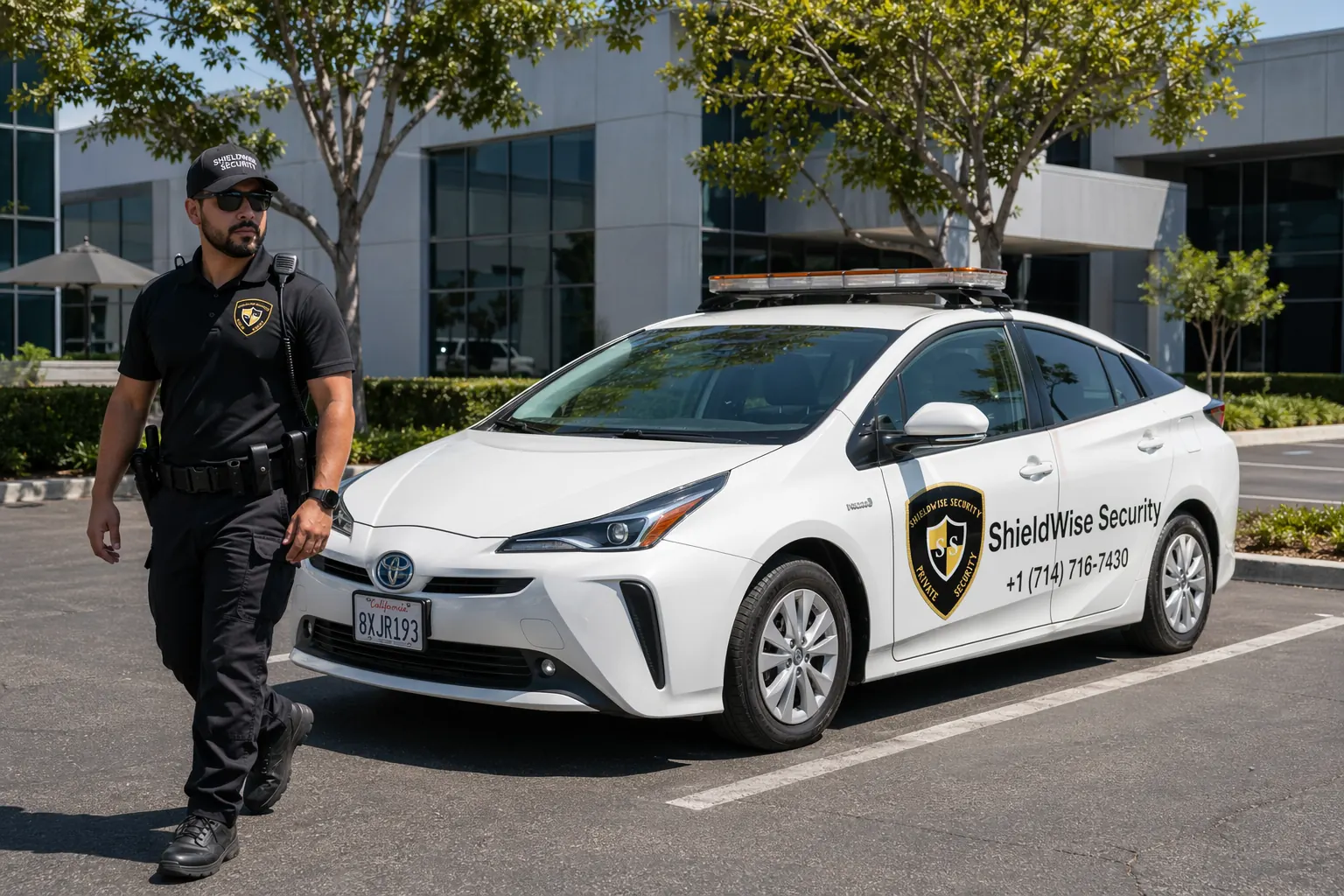
Construction-site coverage centers on two recurring realities: sites sit unoccupied and at highest risk overnight and on weekends, and material and equipment theft tracks directly to how tightly perimeter access and the equipment yard are controlled. Officers patrol the perimeter and yard on a set schedule, log deliveries and subcontractor entry against the site log, and flag fencing, lighting, or gate gaps that create theft opportunity. Coverage is configured around each site's phase and schedule, not a fixed template.
Questions
Frequently Asked Questions
Honest answers to what GCs, project superintendents, and developers actually ask.
Construction theft in California concentrates in a specific window, roughly 11 p.m. to 4 a.m. on weekdays and most of the weekend. Targets are predictable: copper wire, equipment, fuel, lumber, fixtures, and tools. The economics work for the thief because resale markets for stolen materials still exist despite tightened documentation rules under California Senate Bill 1207. Without overnight and weekend coverage, the recurring pattern is theft, insurance claim, deductible, project delay, and replacement cost that runs well past what coverage would have cost. A documented security presence is the deterrent that breaks the cycle.
Construction site security pricing in California depends on coverage hours, post type (standing post vs mobile patrol vs gate-access only), site size, project phase, and whether armed coverage is needed. Mobile patrol is the lowest-cost option for sites that don't need a fixed presence. Standing post is necessary for sites with significant material exposure or perimeter geometry that can't be patrolled effectively. ShieldWise quotes construction security in writing after a site walk. The quote breaks down hourly rate, minimums, supervision, vehicle and fleet charges if applicable, and any premium for short-notice deployment.
Yes. Every construction site security officer ShieldWise assigns holds a current BSIS Guard Card under Business and Professions Code Section 7583.6. Officers complete the 8-hour Power to Arrest course before the first shift, plus 32 additional hours of mandatory training within six months. Armed construction security officers also hold an Exposed Firearms Permit under Business and Professions Code Sections 7583.22–7583.23. ShieldWise operates under PPO #122008. License is verifiable on the BSIS license lookup.
Yes, within the limits of California Penal Code 837 (citizen's arrest authority) and the Power to Arrest training every guard completes. A detention is appropriate when the officer personally observes a crime, trespass under Penal Code 602, theft under 484, or vandalism under 594, for example, or has reasonable cause to believe one occurred. Detentions must be documented immediately, and law enforcement is contacted to take custody. Our post orders define detention authority clearly to prevent the false-arrest exposure that comes from vague rules.
Both, depending on site assessment. Most California construction security runs unarmed because the deterrent value of a visible, documented presence is what stops most theft. Armed coverage is appropriate for sites with significant perimeter exposure, prior armed-incident history, high-value equipment or material concentrations, or specific GC and property-owner request supported by the site assessment. We recommend the configuration that fits the actual risk profile, not what the client thinks they want.
Different jobs entirely. Cal/OSHA safety oversight is the responsibility of the general contractor and the project's designated safety officer under Cal/OSHA Title 8, fall protection, PPE compliance, hot-work permits under NFPA 51B, confined-space entry, hazardous materials. Our security officers observe and report safety hazards they encounter, but they don't substitute for a qualified safety officer. Hiring private security to do OSHA work is a compliance gap that can create real liability when an incident happens.
Yes. Day-to-day coordination runs through the project superintendent or whoever the GC designates as the security point of contact. We attend pre-deployment briefings, share daily activity reports, escalate incidents according to the contact tree, and send weekly summaries that the superintendent can use in safety meetings. Bigger sites or projects with multiple phases get a named ShieldWise account contact who handles the relationship for the project's full duration.
Request Construction Site Security
Most calls come from a GC who's already taken a copper-wire loss this quarter, an owner whose insurance carrier is asking for documented overnight coverage, or a developer launching a project who wants security before the wire and equipment hit the site.
Procurement
Hiring Construction Security Guards in California
What to verify before signing a contract with any construction security provider.
Hiring construction security guards in California requires more than a phone call and a handshake. Every officer must hold a current BSIS Guard Card under Business and Professions Code §7583.6. The company must carry a valid Private Patrol Operator license — ShieldWise's is PPO #122008, verifiable on the BSIS license lookup at bsis.ca.gov. Verify both before your pre-construction meeting. An unlicensed guard on a job site exposes the general contractor and the property owner to direct liability.
On scope: hiring construction security guards who show up and stand in one spot is not a security plan. The value of a construction site guard is observation and documentation across the full site, not a fixed post at the gate. Ask how many checkpoint stops are included per shift, how those stops are logged (GPS-stamped reports are standard), and what the escalation path looks like when theft or vandalism is discovered during a visit.
On budget: construction security guard rates run in the same range as our other unarmed and armed coverage — see the California security guard cost breakdown for current rates by region and service type. Mobile patrol is common for after-hours perimeter checks. Projects with active copper wire or high-value equipment in the lay-down yard should consider nightly coverage rather than weekend-only; the math on a single theft usually exceeds months of guard costs.
ShieldWise provides written proposals after a site walk-through. The proposal includes rate, visit count per shift, supervision schedule, and escalation contacts. Call (714) 716-7430 or request a quote online.
Licensed, bonded, and insured under California law. License verifiable on the BSIS license lookup. Certificate of Insurance available on request.
Last updated: April 2026.