Apartment Security in California for Multifamily Property Managers
Courtesy patrol, lobby and leasing-office coverage, package room oversight, garage and parking patrol, after-hours noise response. Documentation that supports your premises-liability defense. PPO #122008.
Apartment security in California sits at the intersection of two things property managers actually lose sleep over: resident retention and premises liability. Residents who don't feel safe in their building leave when the lease is up. Property owners face premises-liability exposure when a foreseeable third-party crime happens on the property and reasonable security measures weren't in place. Documented, professional security coverage is how you protect both, the resident experience and the legal record.
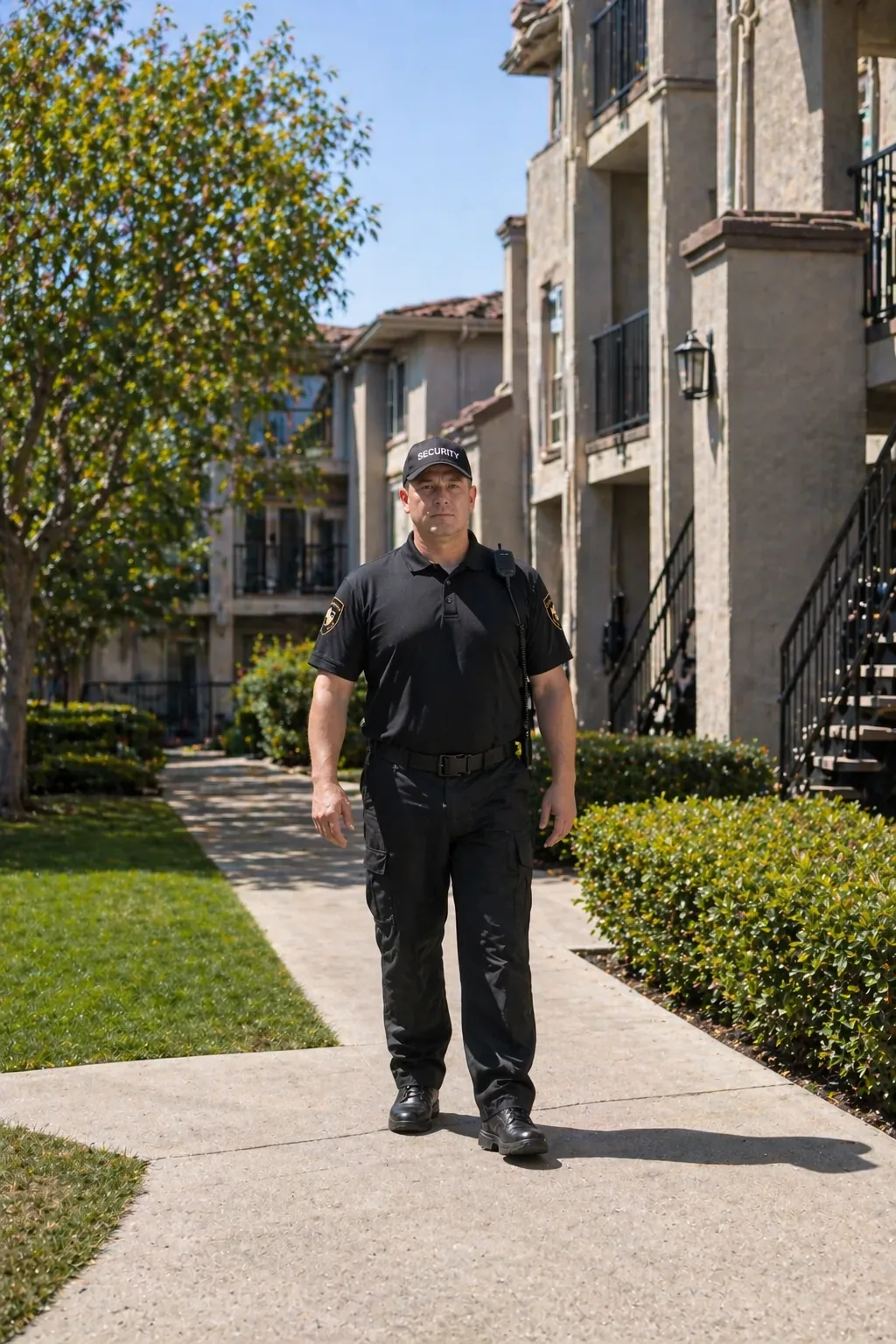
ShieldWise Security provides BSIS-licensed apartment security across California under PPO #122008. We cover garden-style apartment communities, mid-rise multifamily buildings, urban high-rise residential, lease-up properties, Class A luxury apartments, and affordable-housing communities. Officers run courtesy patrol routes, hold lobby and leasing-office posts, oversee package rooms and amenity spaces, document maintenance and trespass issues, and write the kind of incident logs that hold up in court when a property owner needs them.
Courtesy patrol
Common areas & parking
Lobby & leasing
Visitor & package coordination
Package room
Delivery oversight
Liability-grade logs
Daily incident reports
Important: Emergencies and 911
ShieldWise Security does not provide legal, medical, or emergency first-responder services. In an active emergency, always call 911 first. Our apartment security officers coordinate with police and EMS but are not a substitute for them. Domestic violence, medical emergencies, and active threats require law enforcement and EMS response, security officers stabilize the scene, document, and ensure first responders arrive without delay.
Coverage Scope
What Apartment Security Covers
The function changes by property type. The discipline doesn't.
Courtesy patrol, exterior and common areas
Scheduled and randomized walks through parking areas, garages, breezeways, courtyards, mail areas, pool decks, fitness centers, dog parks, and trash rooms. Officers check lighting, identify maintenance issues that affect security (broken gates, dead lights, propped-open doors), and document everything in the daily activity report.
Lobby and leasing-office coverage
For properties with a staffed lobby, the officer is the building's first line of resident interaction outside business hours. Visitor announcement and verification, package coordination, after-hours guest sign-in, intercom response, and emergency assistance. The officer balances welcome with verification, neither cold nor lax.
Package room and delivery coordination
Package theft is the single most common resident complaint in California multifamily. Officers verify delivery driver credentials at properties with controlled access, document deliveries that arrive after hours, secure packages in designated locations, and write up missing-package reports for property management to handle.
Garage and parking patrol
Resident vehicle break-ins, unauthorized parking, vehicle vandalism, and after-hours loitering in parking structures are persistent issues at most California multifamily properties. Documented patrol presence is the deterrent that stops most of it. For properties with a serious recurring break-in pattern, we add specific timing and route adjustments.
After-hours noise & resident-issue response
The 11 p.m. complaint about a neighbor's party, the lockout call, the suspicious person in the breezeway, the domestic dispute that's loud enough to hear through the wall, these come in nightly at properties without coverage. Officers handle the routine ones (noise warnings, lockout escalation to maintenance, suspicious-person observation and 911 if warranted) and document everything.
Trespass and unauthorized access
Non-residents in resident-only spaces, pool, gym, lounge, garage. Drug activity in stairwells. Squatters in vacant units during slow lease-up periods. Officers document the activity in writing under California Penal Code 602 (trespass) and notify the property manager. Posted no-trespass signage and a current trespass authorization on file with local police make enforcement faster.
Emergency response coordination
Fire alarm activations, medical emergencies, lockouts, water damage events, and police calls. Officers ensure 911 is called when needed, evacuate residents from affected areas, support first responders on arrival, and document the timeline. The post-incident report is what property managers send to the asset manager and the insurance carrier.
Lease-up & special-event coverage
Resident events at the pool deck, lease-signing weekends with high traffic through the leasing office, holiday parties in the clubhouse. Coverage scaled up temporarily for the activity. For HOA-governed properties, see HOA security.
Premises Liability
What Property Managers Should Know About Premises Liability
Three operational realities specific to multifamily security in California.
The premises-liability defense is decided on documentation. California premises-liability cases involving third-party criminal acts come down to whether the harm was foreseeable given the property's specific history and the surrounding crime environment, and whether the owner took reasonable security measures in response. The defense isn't "we had a guard", it's "we documented the prior incidents, we adjusted security in response, and we have logs proving the coverage actually happened." Our daily activity reports and incident logs are written with that defense in mind.
Resident-on-resident incidents are different from third-party criminal acts. Domestic violence, neighbor disputes, harassment between residents, these involve people lawfully on the property and require different response protocols than trespasser incidents. Officers document the incident, ensure 911 is called when warranted, support evacuation if needed, and avoid mediating disputes that aren't theirs to mediate. Lease enforcement is property management's job; security supports it without overstepping.
The lobby officer is your most important hire. At a typical multifamily property, the lobby is where most resident interaction happens, most package issues get resolved, and most after-hours problems first surface. The officer at that desk shapes resident experience more than the maintenance team or the leasing agents combined, because they're the only staff residents see consistently after 5 p.m. We screen lobby officers for communication skills, professional presence, and the temperament to handle a frustrated resident without making it worse.
Our Process
Our Apartment Security Process
From property walk and history review to quarterly trend reports, five steps.
Property walk and history review
Before we quote, we walk the property and review the prior 12 months of incident history with the property manager. Where the issues concentrate (pool deck, garage level 2, package room, specific buildings) tells us where to put officers and routes. The history review also informs the foreseeability documentation if a future incident leads to a claim.
Coverage configured to demographics & hours
A 250-unit Class A property with mostly young professionals has a different rhythm than a 400-unit family-housing community. Coverage hours, post placement, courtesy-patrol frequency, and officer profile all adjust. Same baseline BSIS standards; different operational fit.
Officer assignment with continuity
Residents recognize officers. Continuity matters more in multifamily than in any other commercial property type, because the people the officer sees every night are the people whose lease renewals you're trying to protect. We minimize officer rotation on multifamily contracts and announce changes when they're needed.
Daily reports + resident-interaction logs
Standard daily activity reports cover post mechanics, patrols completed, incidents documented, deliveries managed, maintenance issues flagged. Apartment-property reports add a resident-interaction log: who was assisted, what was the nature of the interaction, did anything need property-manager follow-up, did any complaint involve a specific unit.
Quarterly trend reports + annual review
Quarterly reports summarize incident trends, common resident concerns, lighting and access issues observed, and recommendations for the next quarter. Annual security assessments review overall coverage configuration against any changes in the surrounding crime environment, building occupancy, or operating hours.
Compliance
Compliance and Officer Standards
BSIS standards apply to every officer, with multifamily-specific operational training added.
BSIS Guard Card under Business and Professions Code Section 7583.6 applies to every officer assigned to a multifamily property. That means the 8-hour Power to Arrest course before the first shift, 32 additional mandatory training hours within six months, and 8 hours of annual continuing education.
Multifamily-specific operational training:
- Resident interaction and customer-service standards
- De-escalation in noise complaints, neighbor disputes, and after-hours frustration
- Domestic violence response protocols, recognize, ensure 911, do not mediate
- Documentation standards specific to premises-liability defense
- Trespass authorization and California Penal Code 602 documentation
- Coordination with property management, maintenance, and leasing teams
Armed officers at apartment properties carry an Exposed Firearms Permit under Business and Professions Code Sections 7583.22–7583.23. Most California multifamily security runs unarmed because the resident demographic, the brand expectations of the property, and the actual risk profile don't support armed coverage. Class A luxury, family-housing, and student-housing properties are typically unarmed environments. Armed coverage may be appropriate at properties with documented serious-incident history or properties in high-crime corridors with verified threat patterns. We tell you which configuration fits during the assessment.
Background screening:
- DOJ and FBI LiveScan fingerprint clearance
- Pre-employment drug screening
- Reference and employment verification
- Ongoing background monitoring per BSIS standards
Verification. Our PPO and any officer's current Guard Card status is verifiable on the BSIS license lookup. For multifamily property management standards, the California Apartment Association publishes operational guidance and legal updates. The California Department of Real Estate regulates property management licensing, which informs how we coordinate with on-site management staff.
Service Areas
Where We Operate in California
Recurring coverage with consistent officer assignment is most reliable inside our standing zones.
Inland Empire
Riverside & San BernardinoRiverside, San Bernardino, Ontario, Corona, Moreno Valley, Fontana, Rancho Cucamonga, Eastvale, Murrieta, Temecula.
Orange County
Coastal & central OCAnaheim, Santa Ana, Irvine, Huntington Beach, Garden Grove, Costa Mesa, Newport Beach, Fullerton, Tustin.
Los Angeles County
Metro & valleysDowntown LA, San Gabriel Valley, South Bay, San Fernando Valley, Long Beach, Santa Clarita, Glendale, Pasadena.
San Diego County
Downtown & North CountyDowntown, Chula Vista, Escondido, Oceanside, Carlsbad, La Jolla.
Bay Area
Silicon Valley & East BaySan Jose, Oakland, San Francisco, Fremont, Sunnyvale, Hayward, Walnut Creek.
Sacramento & Central Valley
Statewide reachSacramento, Elk Grove, Fresno, Bakersfield, Stockton, Modesto.
For multifamily properties outside our recurring zones, we deploy from the nearest standing crew. Travel time, lodging where applicable, and remote-zone deployment premiums are itemized in writing before contract signing.
Questions
Frequently Asked Questions
Honest answers to what property managers and asset managers actually ask.
Apartment security in California typically covers courtesy patrol of common areas, lobby or leasing-office presence during specified hours, garage and parking patrol, package room oversight, after-hours noise and resident-issue response, trespass and unauthorized-access management, and emergency response coordination. The specific coverage scope is configured to the property's size, layout, hours of resident activity, and incident history. Most California multifamily contracts run unarmed under BSIS Guard Card credentials, with armed coverage reserved for properties with documented incident history that supports it.
California premises-liability cases involving third-party criminal acts examine whether the harm was foreseeable given the property's specific history and surrounding crime environment, and whether the property owner took reasonable security measures in response. Documented security coverage, daily activity reports, incident logs, property walks, history reviews, provides the evidentiary record that supports the defense. ShieldWise daily activity reports and incident documentation are written specifically to support that record.
Most California multifamily security runs unarmed. The resident demographic, the brand expectations of the property, and the typical risk profile don't support armed coverage. Class A luxury, family-housing, and student-housing properties are typically unarmed environments. Armed coverage may be appropriate at properties with documented serious-incident history or high-crime-corridor location supported by site assessment. Armed coverage at residential properties without supporting incident history is rarely justified and creates more liability than it solves.
Courtesy patrol is mobile coverage, officers walk or drive a documented route through the property, covering common areas, parking, and any flagged areas of concern. Standing security is a fixed post, typically lobby, leasing office, or a controlled-access entry point. Most multifamily properties combine both: a standing post during high-traffic hours plus courtesy patrol during the rest of the coverage window. The mix depends on the property's layout, resident demographics, and operating rhythm.
Domestic violence and serious resident-on-resident disputes are matters for law enforcement. Officers respond to those calls by documenting what they observe, ensuring 911 is called when warranted, supporting evacuation if needed and possible, and providing accurate information to arriving officers. Officers don't act in place of police, and they don't enter resident units without consent. Lease enforcement based on incident outcomes is property management's job, supported by the security documentation officers provide.
Officers document delivery activity at properties with controlled package areas, verify driver credentials where appropriate, secure delivered packages in designated locations, and write up reports for any reported missing packages. Package theft prevention starts with property-level decisions, secured package room versus open mail area, video coverage of delivery zones, resident notification systems, that are property-management responsibilities, not security responsibilities. Officers support those systems and document what happens; they don't substitute for them.
Apartment security pricing depends on coverage hours, post mix (standing vs courtesy patrol vs combined), property size, unit count, demographic profile, and any specific concerns (recent incidents, lease-up activity, special events). A 200-unit Class A property with a 24/7 lobby and overnight courtesy patrol prices differently than a 400-unit garden-style community with night-only patrol. ShieldWise quotes apartment security in writing after a property walk and history review. The quote breaks down hourly rate, minimums, supervision, post-specific equipment, and any premium for armed configuration where appropriate.
Request Apartment Security Coverage
Most apartment security calls come from one of three places: a property manager whose existing vendor missed a serious incident, a regional manager rolling out coverage standards across a portfolio, or an asset manager whose insurance carrier is asking for documented overnight coverage as a condition of continued coverage at properties with prior incidents.